
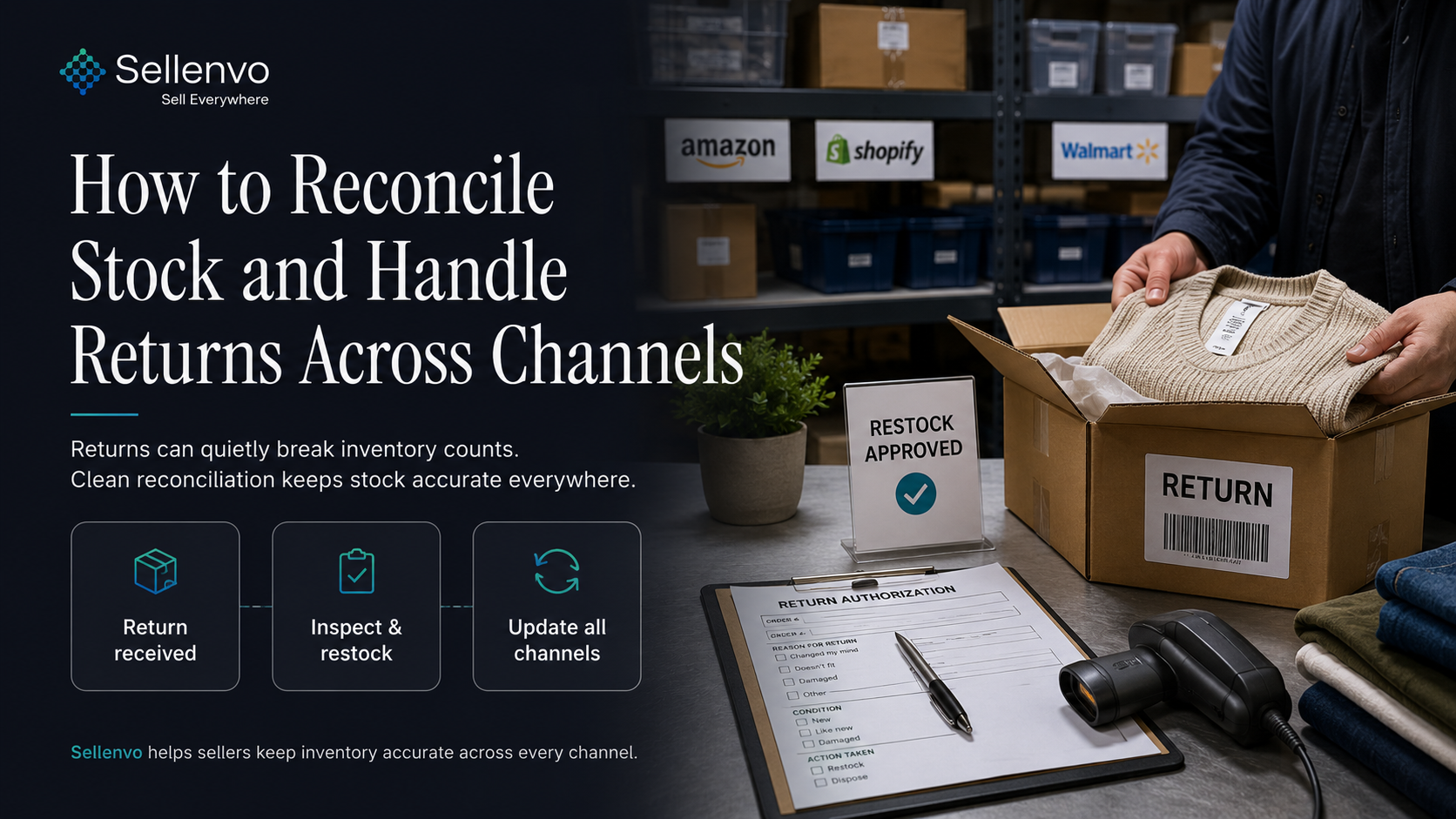
Most multi-channel advice stops at listing and syncing, and then ignores the messy part: returns. A buyer returns an item, it goes back into stock somewhere, and now your counts are off across every channel. Over weeks this drift quietly becomes overselling, dead stock, and numbers you no longer trust. Here is how to reconcile stock and handle returns across channels so your inventory stays accurate.
The short version: returns are stock movements like any other, and they break your counts when they are processed in one channel but not reflected everywhere. Treat returns as part of your sync, not an afterthought.
Why returns wreck multi-channel inventory
When you sell, stock goes down, that part most systems handle. Returns are the reverse, and they are messier. A returned unit might be resellable, damaged, or in limbo while you inspect it. If a return is processed only inside Amazon, your other channels never learn that unit is available again, or that it should stay out of stock. Multiply that across dozens of returns a month and your "available" number becomes fiction.
What clean reconciliation looks like
A reliable setup handles four things:
1. A single source of truth for stock. One master number per SKU that every channel reads, so a correction in one place is true everywhere. 2. Returns that update the master count. When a unit comes back and is cleared for resale, it is added back once and reflected across all channels. 3. A holding state for inspection. Returned items pending inspection are not counted as sellable until you confirm they are, so you do not relist a damaged unit. 4. Regular reconciliation checks. A periodic comparison of system stock against physical stock, so drift is caught early instead of discovered during a stockout.
How to set it up
Run all your channels off one master inventory through a multi-channel platform, and make sure returns adjust that master figure rather than a single channel. With Sellenvo's inventory syncing, stock is one shared number across Amazon, eBay, Shopify, and more, so when a return is cleared for resale it becomes available everywhere at once, and when it is not, it stays out of stock everywhere. One clear dashboard shows you exactly where stock stands.
Returns handled badly vs well
| Per-channel handling | Reconciled across channels | |
|---|---|---|
| Returned unit added back | In one channel only | To the master count, everywhere |
| Damaged returns | Risk of relisting | Held until inspected |
| Stock accuracy over time | Drifts | Stays true |
| Stockout surprises | Common | Caught by reconciliation |
A simple reconciliation routine
You do not need a complex process. Once a week, pick your fastest-moving SKUs and compare the system count to a physical count. If they match, your sync and returns flow are healthy. If they drift, you have caught it early. Most of the time, drift traces back to returns processed in one place, which is exactly what a master-count setup prevents.
Bringing it together
Returns are not an edge case, they are a constant stock movement that breaks multi-channel counts when handled per channel. Run one master inventory, make returns update that master count, hold items for inspection before relisting, and reconcile regularly. Do that and your stock numbers stay trustworthy.
Sellenvo keeps one accurate stock figure across every channel, including returns, on a pay as you grow plan with a free trial. Start a free trial or book a demo.
Frequently asked questions
How do I reconcile stock across multiple channels?
Run all channels off one master inventory number per SKU, so a correction in one place is true everywhere, then compare system stock to physical stock regularly to catch any drift early.
Why do returns throw off my inventory?
Because a return processed in one channel does not automatically tell the others that a unit is available again, or should stay out. That gap is where multi-channel counts drift.
How should I handle returned items that might be damaged?
Keep returns in a holding state until inspected, so they are not counted as sellable. Only clear them back into available stock once you confirm they can be resold.
How often should I reconcile stock?
A weekly check on your fastest-moving SKUs is enough to catch drift early. Slower movers can be reconciled less often.
Does a multi-channel platform handle returns automatically?
A good one lets returns update the master stock count and reflect across every channel, so a cleared unit becomes available everywhere at once rather than only in the channel where it was returned.